
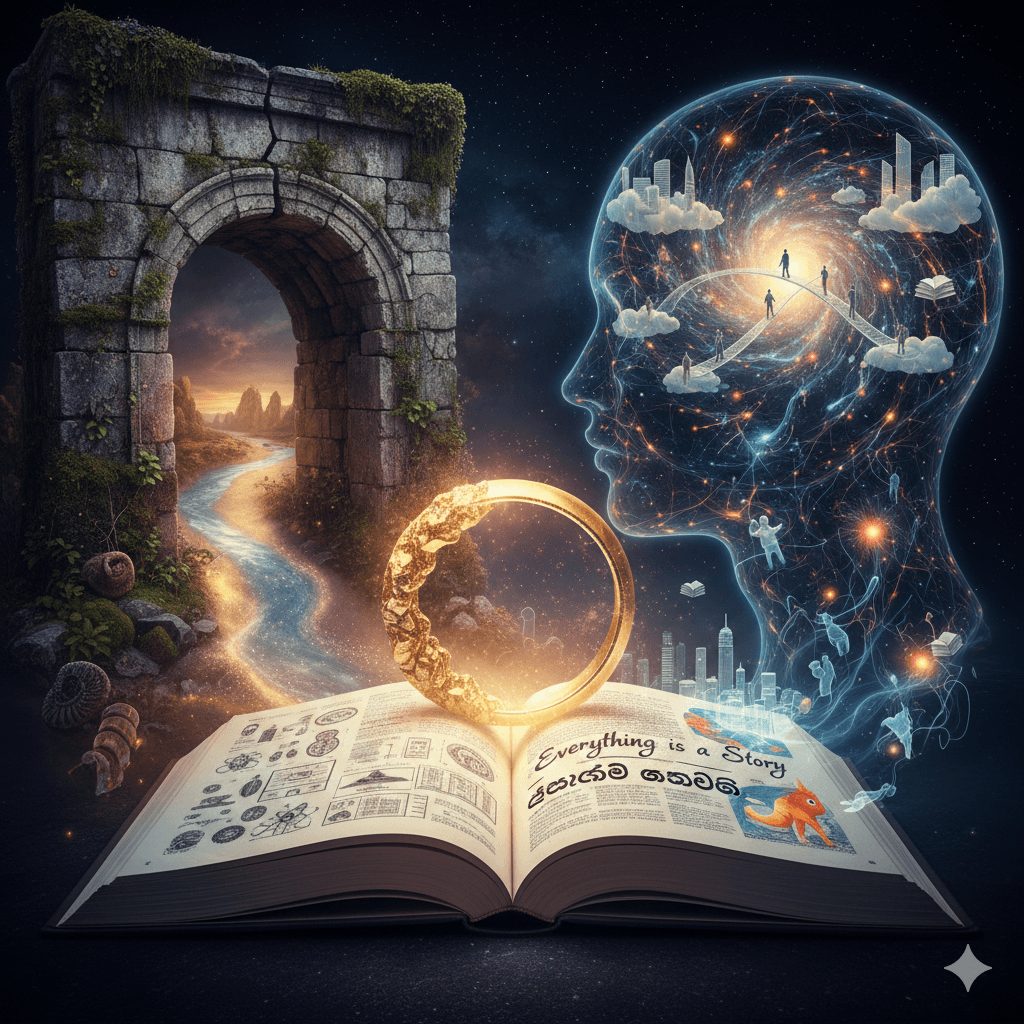
At TrunkDaily, we operate under a singular, radical premise: Everything is a story. This isn’t just a poetic sentiment or a marketing tagline; it is the fundamental lens through which we interpret reality. Whether you are holding a cold cup of coffee, navigating a complex relationship, or dreaming of a future that doesn’t yet exist, you are interacting with a narrative.
By deconstructing the world into stories, we find the threads that connect the physical to the imaginative, and the mundane to the miraculous.
1. The Physical Story: Matter as Memory
We often mistake “physical” things for “static” things. We see a mountain and think of it as a permanent object. However, a mountain is actually a physical story—a billion-year-long epic of tectonic plates clashing, volcanic fire cooling, and the slow, rhythmic erosion of wind and rain.
Every physical object is a narrative of its own creation:
- The Scar on Your Knee: A short story about a childhood bike ride and the sudden realization of gravity.
- A Vintage Watch: A multi-generational saga of craftsmanship, ticking through decades of someone else’s deadlines before reaching your wrist.
- The Skyscrapers of a City: A collective biography of human ambition, engineering triumphs, and economic shifts.
When we view the physical world as a story, we stop seeing “stuff” and start seeing processes. We realize that everything we touch is currently in the middle of a chapter, transitioning from what it was to what it will become.
2. The Imaginative Story: The Blueprints of Reality
If physical stories are about what is, imaginative stories are about what could be. These are the narratives that live in the “white space” of our minds.
At TrunkDaily, we believe the imaginative story is the most powerful force in the universe. Why? Because every physical story began as an imaginative one.
- Before a bridge was built, it was a story someone told themselves about crossing a river.
- Before a social movement changed the law, it was a story about justice shared among a few determined people.
The imaginative story allows us to simulate futures, revisit the past, and empathize with people we have never met. It is the laboratory where reality is designed before it is manufactured.
3. The Intersection: Where the Ghost Meets the Machine
The magic happens when these two types of stories collide. This intersection is where human life actually takes place. We live in a world that is simultaneously made of atoms (physical) and meanings (imaginative).
| Feature | The Physical Story | The Imaginative Story |
| Medium | Matter, Biology, Physics | Language, Dreams, Emotion |
| Evidence | Scars, Rust, Architecture | Art, Ambition, Memory |
| Function | Provides the “Stage” | Provides the “Script” |
| Perspective | The Tangible Chapter | The Potential Chapter |
Consider a wedding ring. Physically, it is a circular band of gold (a story of stellar nucleosynthesis and mining). Imaginatively, it is a story of eternal commitment and identity. Without the imaginative story, the gold is just metal; without the physical story, the commitment has no anchor in the world.
4. Why This Matters: Taking Authorship
If everything is a story, then you are not just a character—you are the author.
When we realize that our failures are just “plot twists” and our successes are “climax moments,” we gain a sense of agency. We stop being victims of circumstance and start being editors of our own experience.
At TrunkDaily, we encourage you to look at your day today through this lens. The commute isn’t just traffic; it’s a transition scene. The difficult conversation isn’t just stress; it’s character development.
The Final Word
Everything—from the cells in your body to the stars in the sky—is a narrative in motion. Some are written in stone and bone, others in light and thought. By recognizing the storytelling nature of reality, we bridge the gap between what we see and what we feel.
Everything is a story. What kind are you writing today?
Leave a Reply